Navigation

Enterprise systems engineering

Engineering forproduction.

We build software for the work your business depends on, from cloud platforms and applied AI to inspection systems on the factory floor.

  • Angular
  • TypeScript
  • Go
  • Python
  • FastAPI
  • PyTorch
  • Node.js
  • MongoDB
  • Docker / K8s

Architecture

From device to platform.

Explore how we connect interfaces, services, models, and industrial devices.

  1. Angular UI
  2. Go API
  3. MongoDB

Typed contracts · Tenant boundaries

Enterprise platforms

Design the application and the infrastructure it runs on, with clear boundaries and an explicit release plan.

Inspect application capability
  1. Camera frame
  2. YOLOv8
  3. Decision

Preprocess → Detect → Validate

Applied AI and vision

Take a model from evaluation to a service with versioned inputs, measurable behavior, and a review path.

Inspect vision capability
  1. POS
  2. Event stream
  3. Inventory

Retry-safe checkout · Reconciliation

Connected operations

Keep checkout, field work, and devices in sync when connectivity and hardware set the rules.

Inspect commerce capability

How we deliver

What happens between brief and release.

Four steps, with a technical artifact to review at each one.

  1. 01

    Measure the baseline

    Map the workload, agree what success means, and record how the current system behaves.

    Baseline worksheetExample
    API latency
    p95
    Queue depth
    peak
    Reject rate
    by batch
  2. 02

    Design the system

    Agree the component boundaries, API contracts, failure modes, and recovery plan.

    Inspection pathExample
    1. Device capture
    2. Inference API
    3. Batch ledger
  3. 03

    Build and verify

    Test real workloads and promote changes through a controlled release path.

    Release commandsExample
    $ npm run verify$ go test ./...
  4. 04

    Hand over operations

    Leave operators with telemetry, ownership, and a runbook for recovery.

    runbook.jsonExample
    {
      "service": "inspection-api",
      "signals": [
        "latency",
        "queue_depth",
        "reject_rate"
      ],
      "rollback": "previous_image"
    }

Systems & stack

System capabilities.

Inspect how each service is designed, where the technology fits, and what your team receives.

Architecture matrix

Service 01

Custom Systems & Architecture

We design cloud migrations and distributed systems around a release and recovery plan. That includes orchestrating containerized services, automating deployments designed to avoid downtime, and testing database restoration.

Engineering targets

  • 99.9% availability target
  • Zero-downtime deploys
  • AES-256 at rest

Final service levels and performance thresholds are agreed during scoping.

Architecture breakdown

Zero-downtime deployment topologies
Rolling and blue-green release strategies with automated health checks and instant fallback upon error budget exhaustion.
Container orchestration
Deterministic Docker containers managed on Kubernetes clusters with horizontal pod autoscaling tuned via load testing.
Automated CI/CD pipelines
Continuous integration running unit, contract, and security vulnerability scans, promoting immutable artifacts across environments.
Data tier security
AES-256 encryption at rest, TLS 1.3 in transit, strict least-privilege networking, and secrets managed via dedicated vaults.
Disaster recovery mechanics
Automated point-in-time snapshots, scheduled restore drills, and validated Recovery Point/Time Objectives (RPO/RTO).
Capacity planning and cost optimization
Traffic profile modeling, predictive resource autoscaling, and granular infrastructure cost attribution per tenant.

Industry use cases

Retail
Elastic checkout clusters capable of absorbing sudden promotional traffic spikes.
Healthcare
Air-gapped or network-isolated data tiers enforcing strict compliance.
Logistics
High-ingestion message brokers absorbing massive fleet telemetry bursts.

Deliverables

  • Infrastructure as Code (IaC) scripts
  • Zero-downtime deployment runbooks
  • Disaster recovery validation reports
  • Capacity and cost models

Implementation stack

  • Docker
  • Kubernetes
  • Go
  • Python
  • MongoDB

Explore related pillars

Scope this service

Case proof

A C++/Qt platform coordinates serialization, YOLO/Detectron vision inspection, and PLC-driven rejection on pharmaceutical lines running at 250 boxes per minute.
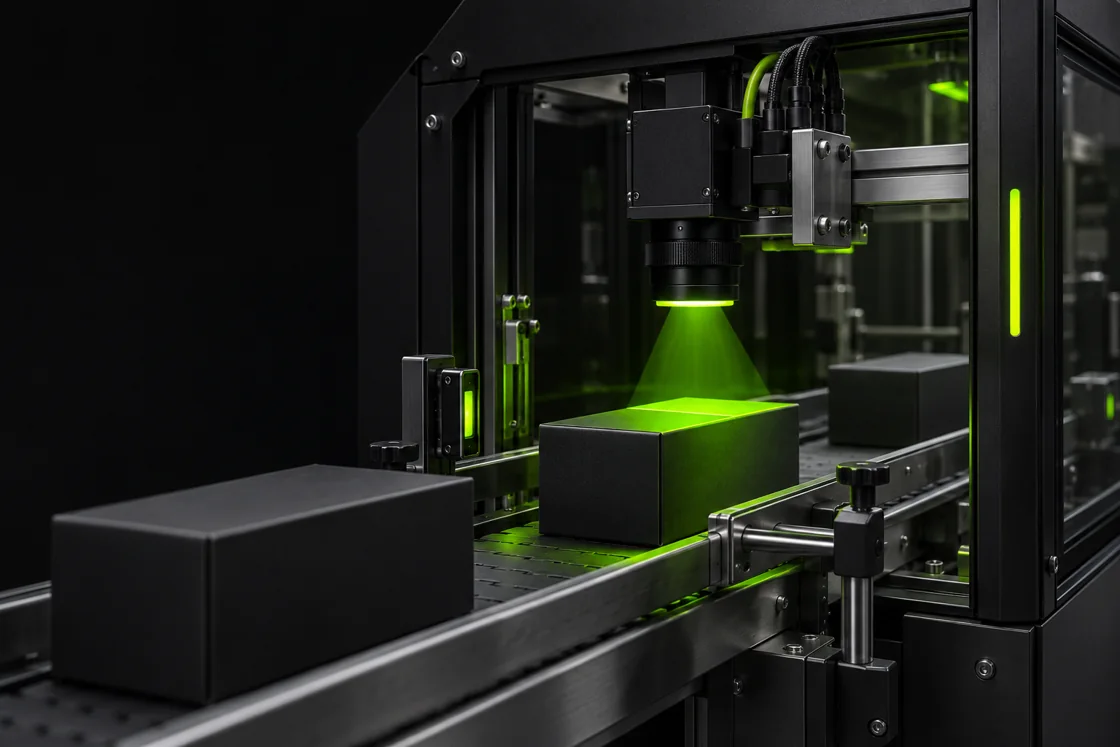
Illustrated machine-vision camera above a pharmaceutical conveyor
Machine-vision inspection · Illustration
Conveyor throughput
250 boxes/min
Box interval timing
240 ms
Pharma enterprise deployments
7

Line architecture

  1. 01Industrial hardware
  2. 02Desktop control
  3. 03Production outputs
Read the case study